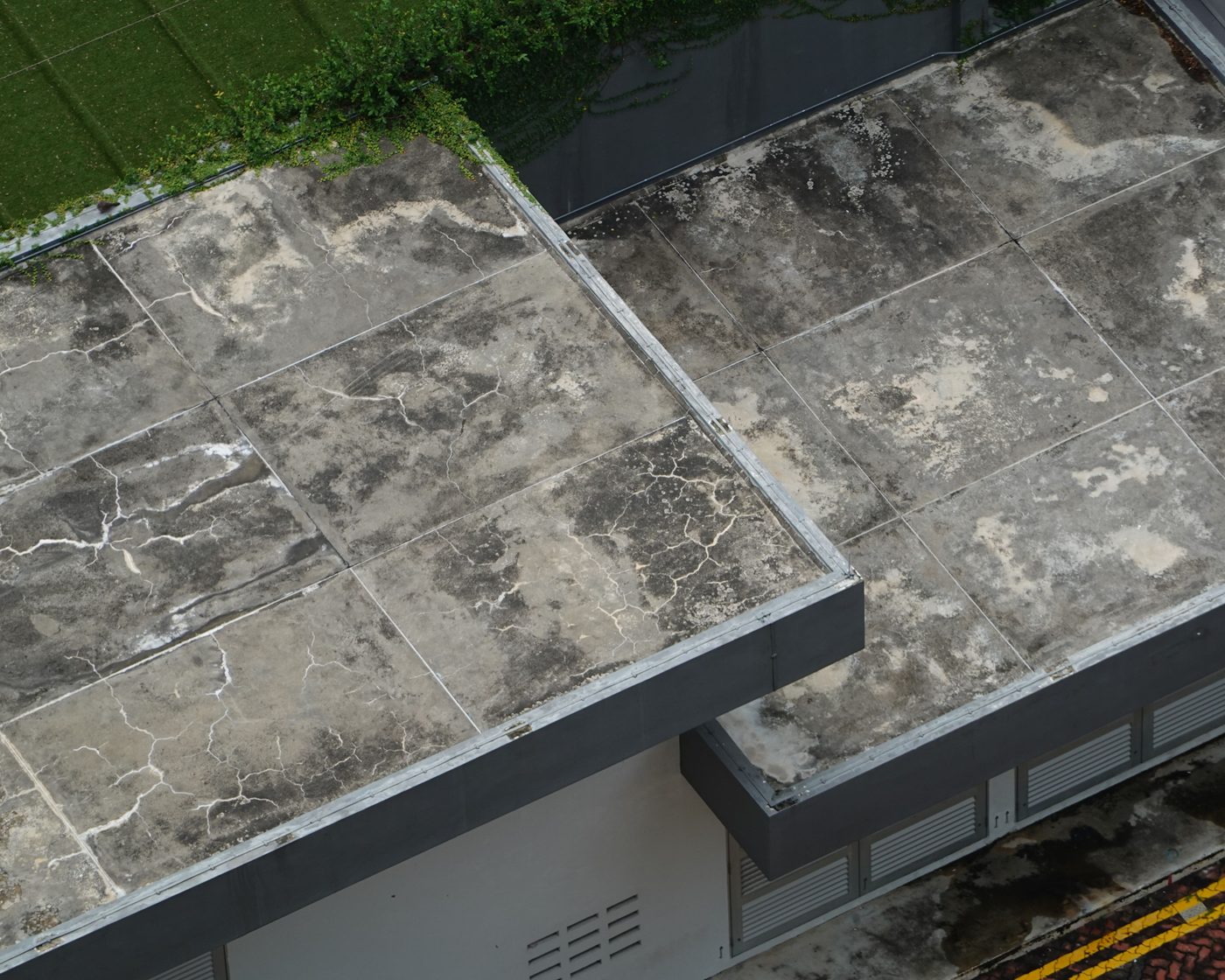
Silicone is the coating specified when water stands on a roof and cannot be made to stop. It cures by reacting with moisture in the air rather than by drying out, it survives ultraviolet exposure without a separate protective finish, and it does not soften where water sits for days. Almost every case for silicone comes from those three properties, and so does almost every argument against it.
The trade runs in both directions. The surface that shrugs off standing water also holds dirt, is slippery when wet, and accepts very little over it later except more silicone. None of that makes silicone the wrong choice. It makes it a choice worth understanding before it is made, because a silicone roof commits a building to a particular way of being maintained for the rest of the roof’s life.
How silicone cures, and what that changes on site
Most water based coatings dry: the water leaves the film and the polymer closes up behind it. Silicone reacts instead, taking moisture from the air to cure, which means humidity is a help rather than a hindrance and the weather window is a different shape from the one an acrylic job needs.
Two practical consequences follow. The surface still has to be dry when the material goes on, even though the cure wants moisture in the air, so early morning dew and a falling evening temperature both matter to the program. And silicone applied by spray travels further than crews expect. Overspray settles on vehicles, glazing, neighboring roofs and rooftop equipment, and it is very difficult to remove once it has cured. Ask how the site will be masked, where the crew will not spray, and what happens on a windy day.
Ponding water: the reason most owners are offered it
An acrylic film is water based, and prolonged standing water works against it: the film can take up water, soften and, in the worst case, wash thin. Silicone does not respond that way, which is why a roof with low spots that hold water for days after rain is usually steered toward silicone.
That property is real. What it does not do is make ponding harmless. Standing water still adds load over the area it sits on, which matters most where it is standing because the deck already deflects there. It still conceals whatever caused the low spot. It grows algae and biological matter that dull a reflective surface and complicate the next recoat. And it appears in the exclusions of a good many manufacturer warranties, which is a document worth reading before the decision rather than after a claim.
Treat silicone as the answer for water you cannot get rid of, not as permission to stop trying. Where a drain can be reset, a sump formed, a scupper lowered or tapered insulation used to move water toward an outlet, that work belongs in the quote alongside the coating.
Dirt pickup, and what it actually costs
Silicone surfaces collect and hold airborne dirt. A roof that was brilliant white on handover goes gray, streaks around the equipment, and darkens most where the water stands.
The cosmetic part is the part owners notice and the part that matters least. The real loss is reflectivity, and with it the share of the energy argument that justified the color. A dirty reflective roof is closer, thermally, to the roof it replaced. Washing recovers a good part of that, and some products are formulated to resist dirt pickup, which is a claim to look for on the data sheet rather than in conversation.
There is a second cost that shows up years later. Dirt on the surface is an adhesion problem at the next recoat, and a silicone roof that was never washed needs more preparation when the time comes. Use the cleaning method the manufacturer specifies. Solvents and aggressive cleaners can do more harm to the film than the dirt was doing.
Traction belongs in the scope, not in a complaint
Wet silicone is slippery. This is a safety question, not a comfort one, and the people it affects are the service technicians who visit the rooftop equipment rather than the roofers who applied the coating.
The usual remedies are simple and cheap when specified in advance: a granule or aggregate broadcast into the final coat along the walking routes, walkway pads laid to the equipment, or both. Added afterwards they are neither simple nor cheap, because the film has already cured and anything bonded to it has to be a silicone compatible product. Mark the routes on the roof plan before the crew arrives.
What silicone will not stick to, and what will not stick to silicone
These are two separate problems and both get missed.
Getting silicone to bond is the first. It needs a sound, clean and dry surface, and the manufacturer publishes which membranes the system is approved over. Several common substrates need a primer, an adhesion test on a small area, or both before the system is approved at all. Grease near kitchen extracts, algae in permanently shaded corners, a chalked and oxidized surface and untreated rust on a metal roof each defeat adhesion in their own way, and each needs a specific preparation rather than a harder wash.
Bonding anything to cured silicone is the second, and the answer is that almost nothing does. Tapes, mastics, sealants, adhesives and paints that work on every other roof surface lift off silicone. That has three consequences worth writing into the building’s records. Repairs must use silicone compatible materials from the same system. Anyone mounting new equipment on the roof must be told what the surface is before they reach for a tube of standard mastic. And at recoat, silicone is the practical option, because other chemistries do not adhere to weathered silicone.
What a silicone roof forecloses
That last point is the one to weigh at the outset. Coating a roof in silicone narrows its future surface options to silicone. For a roof that will be recoated on a cycle and then replaced, that is a manageable constraint and often a good trade for the ponding tolerance. It is worth knowing rather than discovering.
The same constraint reaches the replacement itself. An adhered system over a silicone coated membrane is generally not a route a designer will take, which tends to push a later replacement toward mechanical attachment or a full tear off, with the disposal that implies. Put that in front of whoever holds the capital plan.
Where silicone is the wrong answer
- A roof with constant foot traffic and no walkway protection in the budget
- A roof whose drainage could be corrected properly for a comparable sum
- A building whose owner wants to keep the next decision open
- A substrate the manufacturer will not approve, or will approve only with work nobody has priced
- A roof that fails the moisture survey, where no coating of any chemistry is the answer
That last line is the one that ends most coating conversations, and it is set out in full in our guide to roof coatings. If silicone is still on the table after the survey, compare it against the other chemistries by what actually decides the choice in commercial roof coatings, and ask for the product data sheet for the exact system being quoted. It is a short document, it costs nothing, and most owners never see one.
Common questions
Why is silicone recommended for a roof that holds water?
Because it does not soften where water sits. Water based films can take up water and go soft under days of standing water, and silicone does not.
- That is a property of the cured film, not a claim about the roof
- Standing water still loads the deck and still hides whatever caused it
- It also collects dirt and growth, which dulls a reflective surface
- Manufacturer warranties often treat ponding as an exclusion
Silicone is what you use when the low spots cannot be corrected, not a reason to stop trying to correct them. Ask for the drainage to be priced as part of the work, then read the warranty exclusions before deciding the ponding can simply be lived with.
Does a silicone roof coating need a separate top coat?
Usually not. Silicone holds up under ultraviolet light on its own, which is why most silicone systems are specified as a base and a finish of the same material rather than two different products.
- Polyurethane systems commonly do need an ultraviolet stable finish coat
- Number of coats is still set by the system, not by the chemistry
- Some roofs take a granule broadcast into the final coat for traction
- The data sheet for the product quoted is what settles it
Do not read a single product system as a single coat system. Most silicone specifications call for more than one pass to reach the coverage the manufacturer requires, and the coverage rate, not the number of visits, is what the service life depends on.
Our silicone roof looks dirty. Does that mean it is failing?
Usually not. Silicone surfaces hold dust and airborne dirt, and a roof that looks gray or streaked is often sound underneath the discoloration.
- The real loss is reflectivity, which falls as the surface darkens
- Cleaning recovers part of it, and some products resist dirt better than others
- Use the cleaning method the manufacturer states, not a solvent
- Dirt also matters at recoat, because nothing bonds to a dirty surface
Book the wash as maintenance rather than waiting until a recoat is due, and have the roof looked at while the crew is there. Discoloration is cosmetic, but a split at a curb found during the same visit is not, and both are cheaper caught early.
If we coat in silicone now, what happens when the roof is finally replaced?
The replacement gets harder to design. Adhesives and adhered systems do not bond reliably to cured silicone, so the choices at replacement narrow.
- A new adhered membrane over the old one is usually off the table
- Mechanically attached or a full tear off becomes the likely route
- Tear off of a coated assembly costs more to remove and dispose of
- None of that makes silicone wrong, but it belongs in the comparison
Raise it with whoever will design the replacement, not only with the contractor selling the coating. If the roof is close enough to the end that replacement is the honest answer already, read our page on [coating versus replacement](/articles/roof-coating-vs-replacement/) before ordering either.
Can a silicone roof be patched with ordinary repair materials?
No. Most tapes, mastics, sealants and adhesives will not stick to a cured silicone surface, so a normal patch lifts at the edges and leaks again.
- Repairs need silicone compatible materials from the same system
- Keep a note of the product on the roof, with the maintenance records
- Tell anybody who mounts equipment up there before they start
- A technician sealing a new penetration with standard mastic creates a leak
This is the commonest way a silicone roof gets damaged after a good installation. The people who go on the roof afterwards are rarely roofers, and nobody tells them what the surface is. Put it on the roof access sign and in the handover pack.