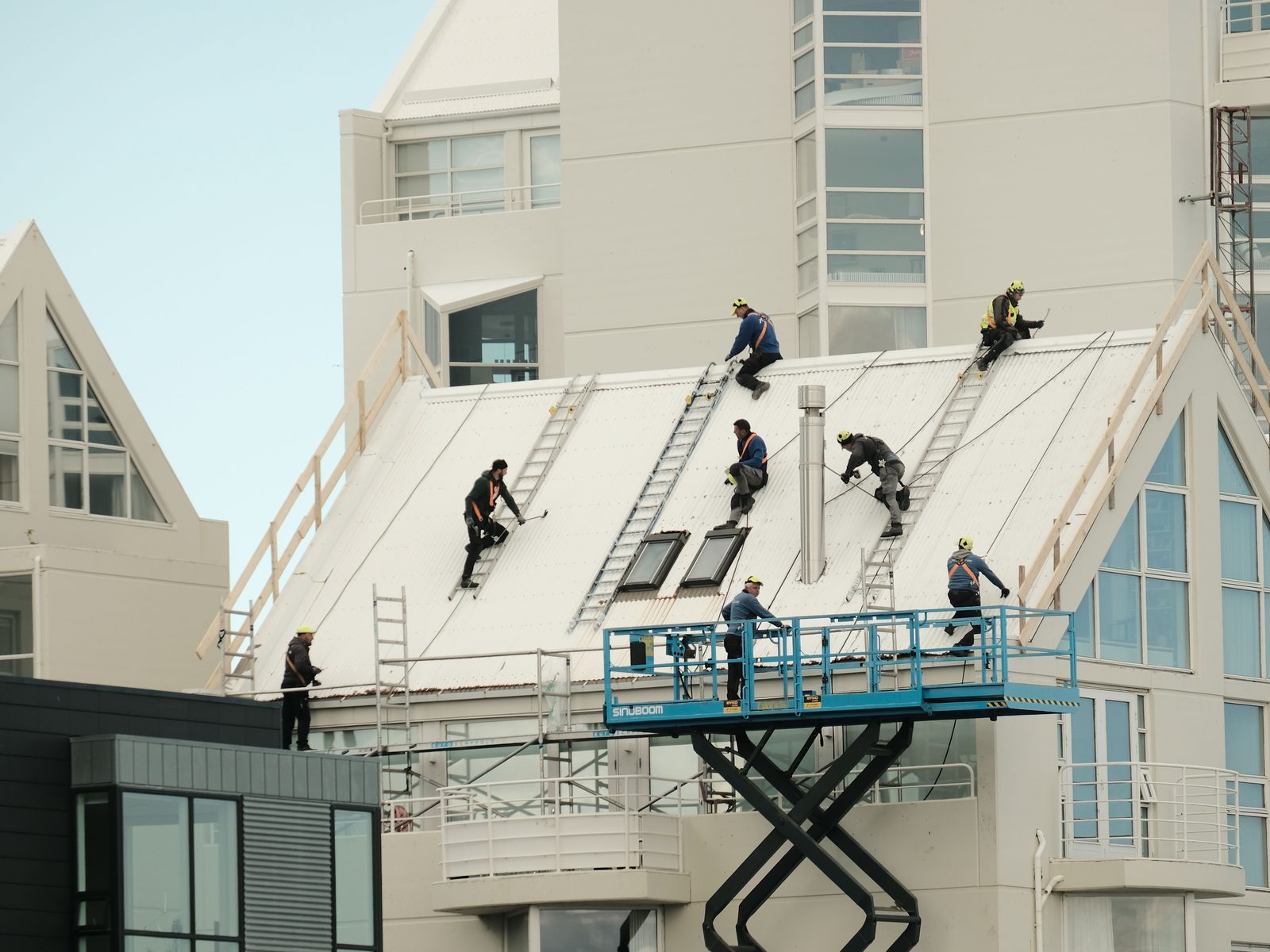
The survey decides, not the quote
Almost everything that determines whether a coating works happens before any material arrives. The condition of the membrane, whether the insulation under it is dry, how carefully the details are prepared and how thick the finished film ends up: those four things decide the outcome. The choice of product matters far less than any of them.
That is why we quote in two parts. The survey and its conclusion come first, with the wet areas marked and the repair work they imply priced out. The coating is the second part, and it is the more predictable one. When you compare our number with another, compare those parts separately, because a quote with a low total and no survey in it has simply moved the unknown work into your next budget year.
What a coating will not do
It will not dry wet insulation. It will not add strength to a deck that has corroded. It will not make a membrane that has reached the end of its life behave like a new one, and it will not correct ponding, because a liquid applied surface follows the shape of whatever lies underneath it.
It is also not a leak repair. A coating cures into a thin flexible film, and over an open hole it bridges rather than bonds. The bridge fails at the first freeze or the first foot that lands on it. Leaks are traced and repaired before coating, not solved by it.
We would rather lose the job than take it on a roof that fails the survey. The reason is practical as much as ethical: a coating applied over wet material fails visibly within a few seasons, and it fails with our name on it.
When a coating is the right call
When the membrane is weathered but intact, the insulation is dry, the deck is sound, the leaks are isolated and the drainage works or can be corrected. On that roof a coating renews the surface, seals the details that were about to become leaks, reflects heat if it is a light color, and resets the clock without tearing anything off.
The other condition is that you know what you are buying time for. A lease running to a known date, a sale, a replacement that has to sit in a later budget year: coating is at its most useful when it is deferring a decision you have already made rather than avoiding one you have not.
Common questions
How do you know whether the insulation under the membrane is wet?
By measuring it, and there are three usual methods: an infrared scan, a capacitance or impedance meter, and core samples.
- Infrared reads the surface at dusk and picks out material that holds heat longer
- A meter reads through the membrane at points across a grid
- A core shows the actual layers, the deck condition and how many roofs are there
- Each has limits: infrared needs conditions, meters depend on the grid, cores are local
Good practice is to use one method to find suspect areas and another to confirm them, then mark the result on a roof plan. Do not accept a coating quote where nobody has measured anything, because the measurement is what the whole decision rests on.
What happens if the survey finds wet areas?
It depends on how much and where, and the honest answer is that it sometimes ends the project.
- Isolated wet areas are normal on an older roof
- They are cut out and replaced with matching board before anything is coated
- That adds a line to the quote and the roof is still a candidate
- Widespread saturation is different: removal starts to approach the cost of replacement
At that point coating is a way of spending money on a roof that has already ended, so we show you the wet areas on a plan and price the removal rather than ask you to take our word. Nobody should coat over wet board: the moisture is sealed in, it goes sideways and upwards, and it blisters the new surface while the deck corrodes out of sight.
What preparation does the roof need before the coating goes on?
More than most quotes describe, and this is the stage where a cheap price is usually made cheap.
- The roof is cleaned first, normally a pressure wash with an approved detergent
- A coating bonds to a dirty surface no better than paint does
- Grease near kitchen extract, algae in shade and chalked surfacing have to come off
- Details are reinforced with fabric or tape before the open field, not after it
- Some substrates need a primer or an adhesion test on a small area
Details are where a coating fails first, and drainage is easier to correct while the roof is open than to coat over. Ask for preparation to be itemized in the quote, because when it appears as one line with no detail it is the line that gets compressed on site.
How is the coating thickness measured and recorded?
Two ways, and you want both in the paperwork: a running check of material used over a known area during application, and dry film thickness measured after curing.
- The running check confirms the coverage rate matches the specification
- Dry film readings are taken at points across the roof, not one convenient spot
- The readings are recorded and handed over with the completion paperwork
- A thin coating is the commonest reason a manufacturer declines a warranty claim
Material spread further than the specification allows raises a contractor's margin and shortens the roof's life, and the finished job looks identical on handover day. Ask what coverage rate is specified and how thickness will be verified, because a contractor who intends to apply the right amount has no reason to object.
Can we coat only part of the roof?
Sometimes, and there are good reasons to. A building with several roof sections of different ages is really several roofs, so coating one and leaving another is sensible.
- Where sections meet, the tie in has to be terminated properly rather than feathered out
- The junction between an old surface and a new one must shed water
- Coating half a single continuous field leaves a join across the middle
- It also complicates a warranty, issued for a defined area applied as one system
Phasing across budget years can work if the sections are genuinely separate, but weathering between phases and product compatibility need planning. Decide the phasing before the first phase goes down rather than after.