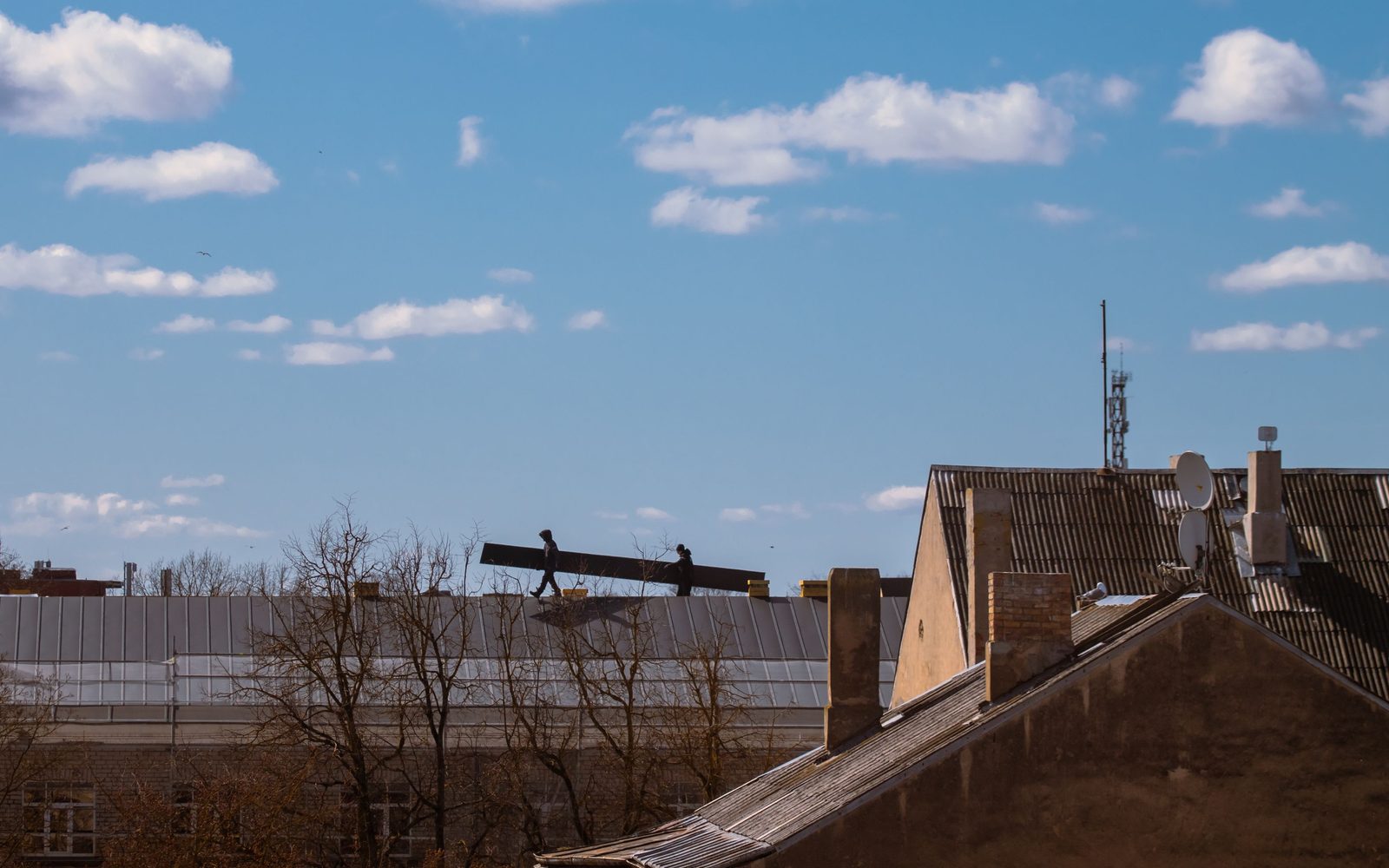
The five kinds of repair work
Owners ask for a roof repair and mean one of five things. There is the emergency hold, where water is coming in tonight and the job is to stop it. There is the traced leak, where the water has stopped but nobody knows where it came from. There is the scheduled list, where an inspection has produced findings and somebody has to turn them into a number. There is the rebuilt detail, where a curb, a drain or a parapet has to be taken apart and put back properly. And there is warranty work, where the roof is still under cover and the repair has to be done with approved materials by an approved contractor or the cover ends.
They are not interchangeable and they do not cost alike. Most of the money owners waste on repair is spent buying one of them while needing another: an emergency patch bought when the roof needed a traced leak, or a list of patches bought when the membrane had already finished. Part of the first visit is saying which of the five you are actually in.
How a scope is agreed
We survey first, then sort, then write. The sort is the part that matters. Findings come off a roof in a heap, and until they are separated into what cannot wait, what can be planned and what only needs watching, no quote means anything.
The scope that follows says what is included, prices the items one at a time, and states plainly what is excluded. Where something cannot be known until the membrane is open, it is carried as a provisional item with the method and the rate agreed in advance, so the variation is arithmetic rather than an argument. If the roof turns out worse than the survey suggested, the work stops, the area is made safe and photographed, and you get the choice before the money is spent.
Where repair stops being the right purchase
A repair scope assumes a sound roof with local failures. When the membrane has gone brittle across the field, when the insulation is wet over a wide area, or when a new leak appears in a new place every month, the assumption has failed and more patches will not fix it.
A metal roof reaches the same point differently, when the fixings and laps have all aged together and the sheet has lost section from the back. When we find that, we say it. The next conversation is restoration, recovery or replacement, and it is a better conversation to have a year early than a year late.
Common questions
Do you take on one small repair, or only larger contracts?
Yes, we take single repairs. The honest warning is that one small repair is the worst value on the list, because the cost of getting to the roof is the same as it would be for ten.
- Crew, materials, access and safety setup are spent before anyone lifts a tool
- That cost barely moves between a small job and a medium one
- If there are other known defects, put them on the same visit
- If there are not, ask for a walk of the roof while we are already up there
That walk usually produces a short list of items you did not know about, priced while the access is paid for either way. You are free to do none of them. It is still better to know what is up there before the next rain finds it for you.
Can you work from an inspection report somebody else wrote?
Yes, and it is a good starting point. We still walk the roof before pricing, because a report says what was visible on one day and not what is under the membrane now.
- Reports vary in how precisely they locate a finding
- A photograph with no plan reference can take longer to find than to fix
- Some findings will have moved on, and a few will have stopped mattering
- Occasionally a report has missed the thing next to the one it recorded
Send the report, any warranty paperwork and a roof plan if one exists. Tell us whether it came from a maintenance contractor or from a warranty inspector, because the two are written for different readers and they grade findings differently.
What is normally excluded from a repair scope?
Interior making good, anything structural, and work on the equipment that sits on the roof. Those are separate trades and separate money, and a repair quote that looks like it covers them usually does not.
- Ceilings, tiles, decoration and damaged stock are an insurance conversation
- A soft or corroded deck found under wet insulation is structural work
- Lifting, isolating or reconnecting a rooftop unit belongs to another trade
- Stripping a failed coating can be a project rather than a line
We list exclusions rather than leaving them implied, because that is where disputes start. If something on that list matters to you, ask for it to be priced instead of assuming it will be picked up along the way.
Who decides what gets repaired if the budget will not cover the list?
You do, and the job of the quote is to make that decision possible. Items are priced separately with a plain note of what deferring each one means.
- Anything touching water movement goes first: outlets, laps near drains, open details
- Anything keeping water off an area we know is wet goes next
- Slow moving and cosmetic items can usually wait a season
- An item that turns into a different job if left is marked as such
The distinction worth protecting is between a repair that stays a repair and one that becomes insulation replacement. Deferring the first kind costs you a little. Deferring the second kind changes what you are buying next year.
Can we hold a repair budget for the year and draw against it?
Yes. Some owners agree a figure for the year, we work to agreed rates and an agreed method, and each call off is recorded against it rather than quoted from scratch.
- It suits portfolios and buildings with a known backlog
- Rates and method are settled once instead of argued every time
- Each call off still gets its own photographs and record
- Anything outside the agreed scope is quoted before it starts
It is not a maintenance program and it does not replace one. A program is planned attendance that finds defects. This is a way of paying for the repairs that come out of it without a fresh negotiation every time something small needs doing.