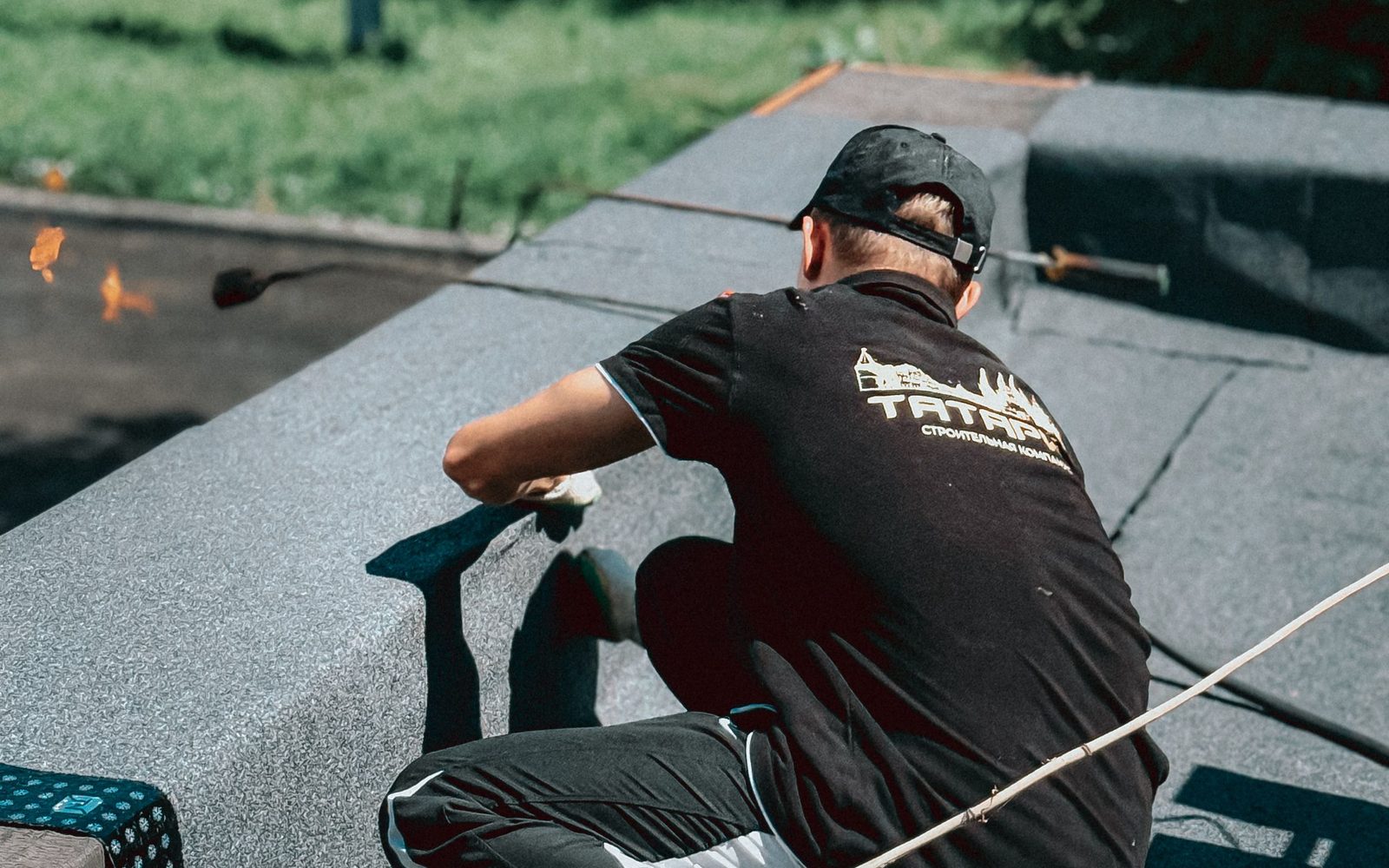
Why scheduled repair costs less than reactive repair
The same repair costs different amounts depending on when you buy it. Bought as an emergency, it carries an out of hours premium, a separate mobilization, and usually a return visit because the weather on the day of the leak is rarely the weather a permanent repair needs. Bought from a list, in a dry week, alongside seven other items, it is a line on a quote.
That is the entire argument for treating repair as planned work. It is not that reactive repair is done badly. It is that you pay the access and set up cost every single time, and a roof with a backlog of small defects will generate call outs until somebody clears the backlog.
The quote is written in three lines, kept separate. Mobilization covers getting people, plant and materials onto the roof and does not change much with the size of the job. The repairs are priced item by item, so you can see what each finding costs and take or defer it on its merits. Insulation replacement is separate again, because it is the line nobody can size accurately until the membrane is open.
A single number with no breakdown makes it impossible to tell whether you are paying for the repair or for the ladder, and it makes it impossible to compare two quotes honestly. If a competitor’s number looks lower, the breakdown is usually where the difference lives.
What we do not do
We do not quote repairs from a photograph or from a walk around the parapet. The insulation underneath decides whether a patch will hold, and that cannot be assessed from a distance.
We do not recommend repair on a roof that has stopped being repairable. A membrane that is brittle across the field, shrinking away from the walls, or leaking somewhere new every month is telling you its service life has ended, and spending on patches is spending without solving. Where that is what we find, we say it, even though the replacement is not ours.
When people book
Budget season, mostly, when a list of findings from an inspection needs turning into a number that can be defended. After a storm, when several items appear at once. Before a warranty inspection, when outstanding defects have to be cleared to keep cover. And ahead of a sale, when a buyer’s surveyor has produced a schedule someone has to answer.
Common questions
Will you repair a roof you did not install?
Yes, and most of the roofs we repair were installed by somebody else. What matters is whether we can identify what it is and repair it to the right method.
- Materials that look similar do not behave alike
- A PVC patch will not weld to a TPO roof
- Where the membrane is unlabeled or coated, we establish what it is before quoting
- A roof inside a manufacturer warranty has to be worked on by an approved contractor
The wrong contractor or the wrong materials can end cover on a roof with years left to run, which is a much larger loss than the repair. Tell us who installed it and when, and send any warranty paperwork. If we are not approved under it, we will say so.
Should I repair everything at once or only what is leaking?
There is a real economic argument for doing more than the leak, and it is not a sales line. Most of the cost of a repair is getting crew, materials and safe access onto the roof.
- That cost is spent whether we fix one item or ten
- Calling us back in three months means paying the set up twice
- A rusting fastener in a field that is otherwise sound can be watched
- A lifted lap beside a drain cannot, because the next rain puts water over it
We quote items separately so the decision is yours, with the consequence of deferral written next to each line rather than implied. The general rule is to take everything that touches water movement and be relaxed about the rest.
Will the work disturb the tenants or the rooftop equipment?
Less than most people fear, but it is worth planning rather than discovering. Repair noise comes in short bursts and carries into the space directly underneath.
- Torch applied bitumen repairs need a fire watch and usually a permit
- Solvent based products carry odor, so air intakes may need covering or shutting
- Rooftop units sometimes need a short shutdown while a curb or flashing is rebuilt
- Occasionally a unit has to be lifted clear, which is a separate trade and cost
Give us the constraints when you send the list of work: the tenant hours, the equipment that cannot stop, the routes we are not allowed to use. It is cheaper to design the work around them than to stop halfway through.
What happens if you open the roof and find more than the quote covers?
We stop and tell you before we spend your money. The crew makes the opened area safe and watertight, photographs what was found, and we price the extra work before it starts.
- Wet insulation wider than expected, a corroded deck, a detail built wrong originally
- None of that can be seen from the surface
- A repair quote is known work plus a method for handling the unknown
- The method matters more than the estimate
We will not close the roof over a problem we have just discovered and invoice as though we had not seen it, or present the extra as a fait accompli on the final bill. Ask any contractor how they handle this before you award the job.
How is a metal roof repair different from a membrane repair?
The failure points are different, so the work is different. A membrane roof fails where the sheet was cut or joined by hand, and a metal roof fails at its fixings and movement joints.
- Exposed fastener washers harden and shrink with sun and thermal cycling
- Once they stop sealing, every fastener on the roof is a potential entry point
- Panel laps open because metal moves a long way across a long run
- Penetrations cut through a profiled panel are hard to seal and leak years later
Corrosion decides whether repair is still sensible. Surface rust can be treated, but panels perforated from the back, usually at laps or where debris has held moisture, are past it. Options then run from refastening and resealing to a coating or a retrofit system over the existing roof.