A polyurethane roof coating is a liquid applied membrane that cures to a tough elastomeric film. Among the coatings used on commercial roofs it is the hard wearing one: it resists foot traffic, hail and abrasion better than acrylic or silicone, and it handles standing water far better than acrylic does. That combination makes it the usual answer on roofs that people walk on and at the details where other coatings give out first.
It is rarely the cheapest option per square, and it is almost never the whole answer on its own. Most polyurethane specifications are two coats of two different chemistries, and many pair a polyurethane base with a reflective top coat from another family. Our coatings overview covers the whole set; this page covers where polyurethane earns its place.
How it compares
| Property | Polyurethane | Silicone | Acrylic |
|---|---|---|---|
| Foot traffic and impact | Strongest | Weak, stays slick | Moderate |
| Standing water | Good | Best | Poor |
| Ultraviolet stability | Good in aliphatic top coat | Excellent | Good |
| Dirt pick up | Low | High | Low |
| Recoating later | Open to most chemistries | Practically silicone only | Open |
| Cost per square | Higher | Middle | Lowest |
The last two rows are where the long view sits. Silicone against acrylic covers that pair in detail. Polyurethane’s quiet advantage is that choosing it does not restrict what you can do at the next cycle.
Where it is the right call
- Roofs with rooftop plant and regular service visits. Mechanical contractors will walk across it whatever the signage says.
- Details and transitions. Curbs, pitch pans, seams and penetrations, where movement and wear concentrate. Many jobs use polyurethane only here, with a cheaper coating across the field.
- Over sprayed polyurethane foam. Foam has no resistance to sunlight and must be protected, and a tough coat deals with impact damage as well.
- Roofs that see hail or wind driven grit. Abrasion resistance is measurable and it is where acrylic struggles.
- Where a future silicone decision should stay open. Coating in polyurethane now keeps the next option list wide.
What the roof needs before any of it
A coating is a surfacing decision, not a repair. The things that decide whether it is even appropriate are settled before the material is chosen.
- The insulation must be dry. Trapped water does not dry under a coating; it spreads and the assembly keeps degrading. A moisture scan or core samples answer this, and nothing else does.
- Defects must be repaired, not covered. Splits, open laps, failed flashings and backed out fasteners are repairs first. Restoration sets out that sequence.
- Drainage must work. Polyurethane tolerates ponding far better than acrylic, but water that sits still adds load and shortens everything’s life.
- The substrate must be compatible. Some membranes need a primer, some need a specific one, and some will not take a coating at all.
- The surface must be clean. Grease near kitchen extracts, silicone residue and chalked coating all defeat adhesion.
If the roof fails the first test, you are looking at replacement rather than coating. Coating against replacement is the honest comparison, and what makes a roof a restoration candidate sets out the criteria plainly.
Where it is the wrong call
On a roof that ponds badly and sees no traffic, silicone does the weather job for less. On a roof where the budget only stretches to a thin film and the goal is reflectivity on a sound membrane, acrylic is the honest answer. And on a roof with wet insulation beneath it, no coating of any chemistry is the right call, because the money buys a seal over a problem that is still growing.
What to get in writing
Name both chemistries and the dry film thickness of each coat. Name where reinforcing fabric is used. Name the primer, if any. State how thickness will be verified and recorded on the day. State the manufacturer warranty, what it covers and what maintenance it requires of you, because a coating warranty with unmet conditions is a document rather than a protection.
Where to go next
If the roof is sound and the goal is lower surface temperature rather than durability, reflective roof coating covers what reflectivity actually buys. If you want the work priced, our coating services set out what a survey establishes before anybody quotes a system.
Common questions
What is the difference between polyurethane and silicone roof coating?
Silicone holds up best against standing water and sunlight but stays slick and picks up dirt. Polyurethane is far tougher mechanically: it takes foot traffic, hail and abrasion, and it can be recoated with almost anything later. Silicone is the weather answer, polyurethane the wear answer.
- Silicone resists ponding water better
- Polyurethane resists traffic and impact better
- Silicone attracts dirt and loses reflectivity
- Only silicone sticks reliably to silicone later
- Polyurethane leaves future options open
The recoating point is the one owners underrate. Once a roof is in silicone, the practical choice at the next cycle is more silicone, because little else bonds to it reliably. A polyurethane roof can be recoated in polyurethane, acrylic or silicone, so it does not narrow the next decision at all. Many specifications use both chemistries deliberately, with polyurethane as a base coat where toughness is needed and a silicone or acrylic top coat above it for weathering and reflectivity.
Does polyurethane roof coating stand up to foot traffic?
Better than any other common roof coating, which is its main reason for existing. On a roof with rooftop plant, regular service visits or a maintenance route across it, polyurethane is usually the specification, often with aggregate broadcast into it to give grip.
- The toughest of the common coating chemistries
- Aggregate can be broadcast in for a non slip surface
- Suited to plant rooms and service walkways
- Still benefits from defined walkway protection
- Resists abrasion from debris and wind driven grit
Toughness is not a substitute for a walkway. Even a polyurethane surface will wear where the same route is used weekly, so the sensible arrangement is a coated roof plus a defined protected route to the equipment. [Walkway pads](/articles/roof-walkway-pads/) explains why the route matters more than the material. Where the roof is genuinely trafficked rather than occasionally visited, discuss a traffic grade specification rather than assuming a standard roof coating will take it.
Should the coating be aromatic or aliphatic polyurethane?
Both, in most cases. Aromatic polyurethane is tougher and cheaper but chalks and discolours in sunlight, so it is used as the base coat. Aliphatic polyurethane holds colour and gloss under ultraviolet light, so it goes on top as the exposed layer.
- Aromatic is the base coat: tough and economical
- Aliphatic is the top coat: stable in sunlight
- Aromatic alone will chalk where it is exposed
- Aliphatic alone is an expensive way to build thickness
- The specification should name both and their thicknesses
If a quote says polyurethane coating with no further detail, ask which chemistry goes where and at what thickness. An all aromatic system will look poor within a couple of seasons and lose reflectivity, while an all aliphatic system spends money on the wrong layer. Ask for the dry film thickness of each coat in writing, since thickness is what you are buying and it is the easiest thing to quietly reduce once the quote has been accepted.
Can polyurethane coating go over a spray foam roof?
Yes, and it is one of the standard protective coats for foam. Sprayed polyurethane foam has no ultraviolet resistance of its own and must be covered, and a polyurethane coating bonds to it well while taking the impact damage that foam alone cannot.
- Foam must be protected from sunlight to survive
- Polyurethane bonds readily to a foam substrate
- It resists the impact damage foam is vulnerable to
- Thickness over foam matters more, not less
- Birds and hail are the usual causes of foam damage
The foam surface has to be sound before anything goes over it. Blisters, bird pecking, hail punctures and any area that has taken water need cutting out and replacing rather than coating over, because a coating applied to damaged foam seals water into the thing it was meant to protect. Ask how the existing coating thickness was measured and what the recoat specification is, since foam roofs are designed to be recoated periodically and the schedule is part of the asset, not an afterthought.
How is polyurethane roof coating applied?
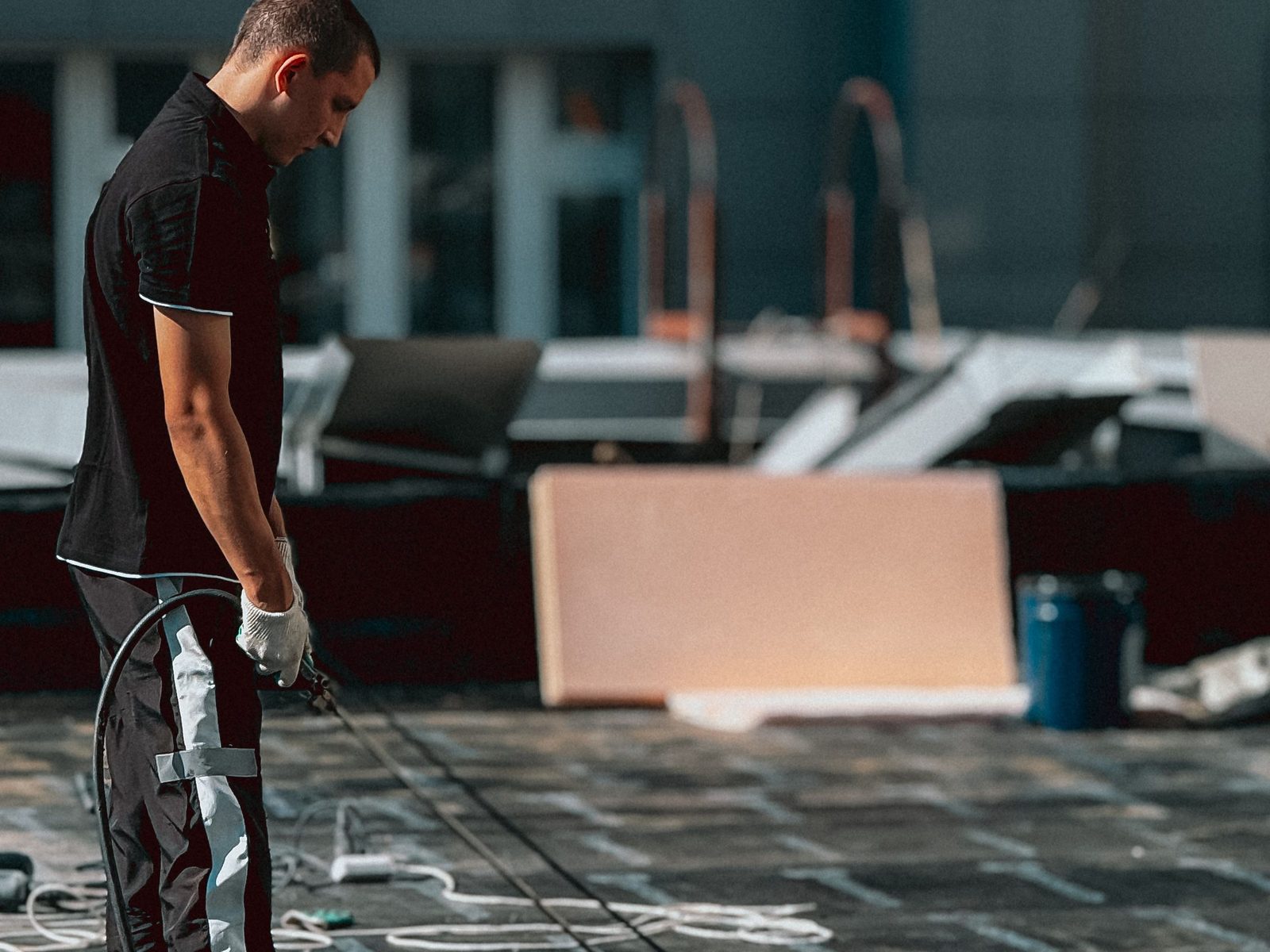
By spray on open areas and by brush or roller at the details, over a surface that has been cleaned, repaired and primed where the substrate requires it. Reinforcing fabric is set into the wet coating at seams, flashings and anywhere the roof moves.
- Clean, dry and repaired before anything is applied
- Primer where the substrate or the manufacturer requires it
- Fabric reinforcement at seams, laps and details
- Base coat, then top coat, each to a stated thickness
- Moisture and temperature limits during cure
Ask how thickness is being verified rather than claimed. Wet film gauges during application and a documented material usage figure per area are both normal, and a contractor who records neither is asking you to take the most expensive part of the job on trust. Ask also what the cure conditions are and what happens if rain arrives early, because a coating washed off before cure is a cost somebody has to carry and the contract should say who.